

I have a Bible study group that I absolutely love. It’s just a few like-minded, very busy women who simply love to love God. There’s something really special about that kind of space—no pressure, no performance, just hearts that want to grow.
We’re studying Women of the Bible by Max Lucado, and wouldn’t you know it, the week I couldn’t attend was Rahab. Of course it was. She’s always been one of my favorite people in Scripture. Susan Campbell and I even did a podcast on her last year, so I thought I knew her story pretty well.
But what I learned studying Rahab this time surprised me.
Studying on my own took me deeper than I expected. Deeper into the mindset of the Israelites. Deeper into the culture of Jericho. And deeper into understanding why what Rahab did wasn’t just brave—it was extraordinary.
What I learned studying Rahab is that she didn’t just take a risk—she chose a side.
We often simplify her story to “she hid the spies,” but it was so much more than that. Jericho was strong, fortified, and confident. The Israelites were outsiders with stories surrounding them—stories of a God who parted seas and defeated armies. Rahab said, “We have heard…” Everyone had heard. But only Rahab responded.
The rest of Jericho heard about God and held tighter to their walls. Rahab heard about God and surrendered.
That’s what made her different.
She didn’t wait for proof. She aligned herself with God before anything changed.
And what I learned studying Rahab is how clearly she saw Him. She declared, “The Lord your God is God in heaven above and on the earth below.” That’s a bold, confident statement of faith—from a woman who wasn’t raised in it, who didn’t grow up witnessing miracles, who only knew God through what she had heard.
Meanwhile, the Israelites had seen the Red Sea part and still struggled to believe.
It made me pause. Sometimes familiarity can dull our sense of awe. What I learned studying Rahab reminded me not to lose that.
And then there’s the reality of what she actually did. It wasn’t just courageous—it was dangerous. She betrayed her city. If she had been discovered, it would have cost her everything. This wasn’t a safe or symbolic act of faith. It was real, immediate, and risky.
She didn’t know how things would unfold. She didn’t know when the walls would fall. All she had was a promise and a cord.
And yet, she acted.
That’s the kind of faith that challenges me—the kind that moves before certainty. And honestly, what I learned studying Rahab is that real faith often looks risky in the moment.
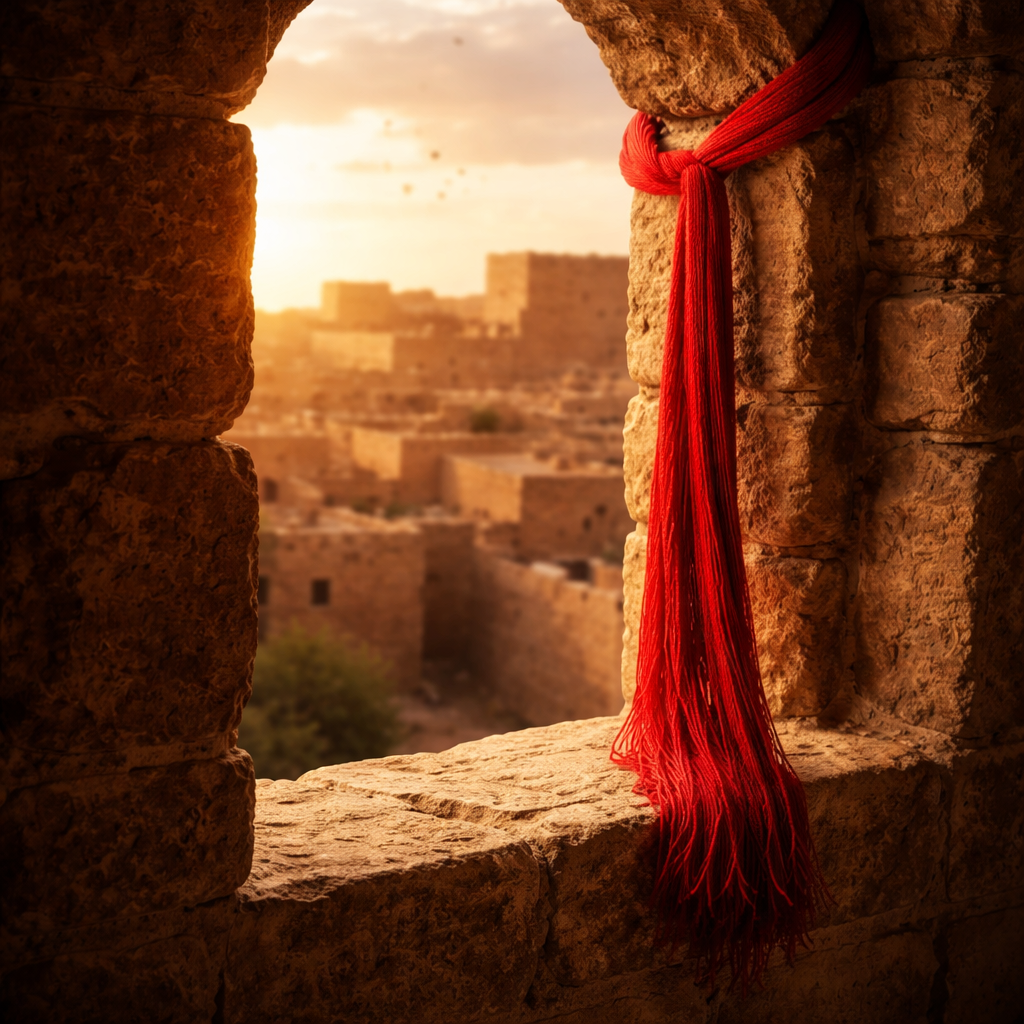
The scarlet cord she hung from her window has always been meaningful to me, but this time I saw it differently. It wasn’t hidden. It wasn’t subtle. It was visible. It marked her home in the middle of a city that was about to fall.
She was, in essence, saying, “I belong to the God of Israel.”
That kind of faith isn’t quiet. It’s visible. It’s identifying. And if I’m honest, it made me wonder where I keep my faith more private than I should.
What moves me the most, though, is how her story didn’t end with survival. God didn’t just spare her—He completely rewrote her life. She became part of the lineage of Jesus. A woman once defined by her past became part of God’s redemptive plan for the world.
That never stops amazing me.
What I learned studying Rahab is that God doesn’t just rescue us from something—He invites us into something.
Maybe this study went deeper for me because I’m older now. Maybe I understand risk differently. Maybe I see more clearly how easy it is to hear about God and still stay safely behind the walls of what feels comfortable.
Rahab didn’t stay behind the walls.
She aligned herself with the God who was about to bring them down.
And I think that’s what stays with me the most. Faith isn’t just believing who God is—it’s being willing to step out of what feels secure and trust Him anyway.
I missed my Bible study that week, but somehow I feel like I didn’t miss it at all.
And maybe what I learned studying Rahab isn’t just for me.
Maybe if her story is stirring something in you too, that’s not by accident.




Leave a Reply